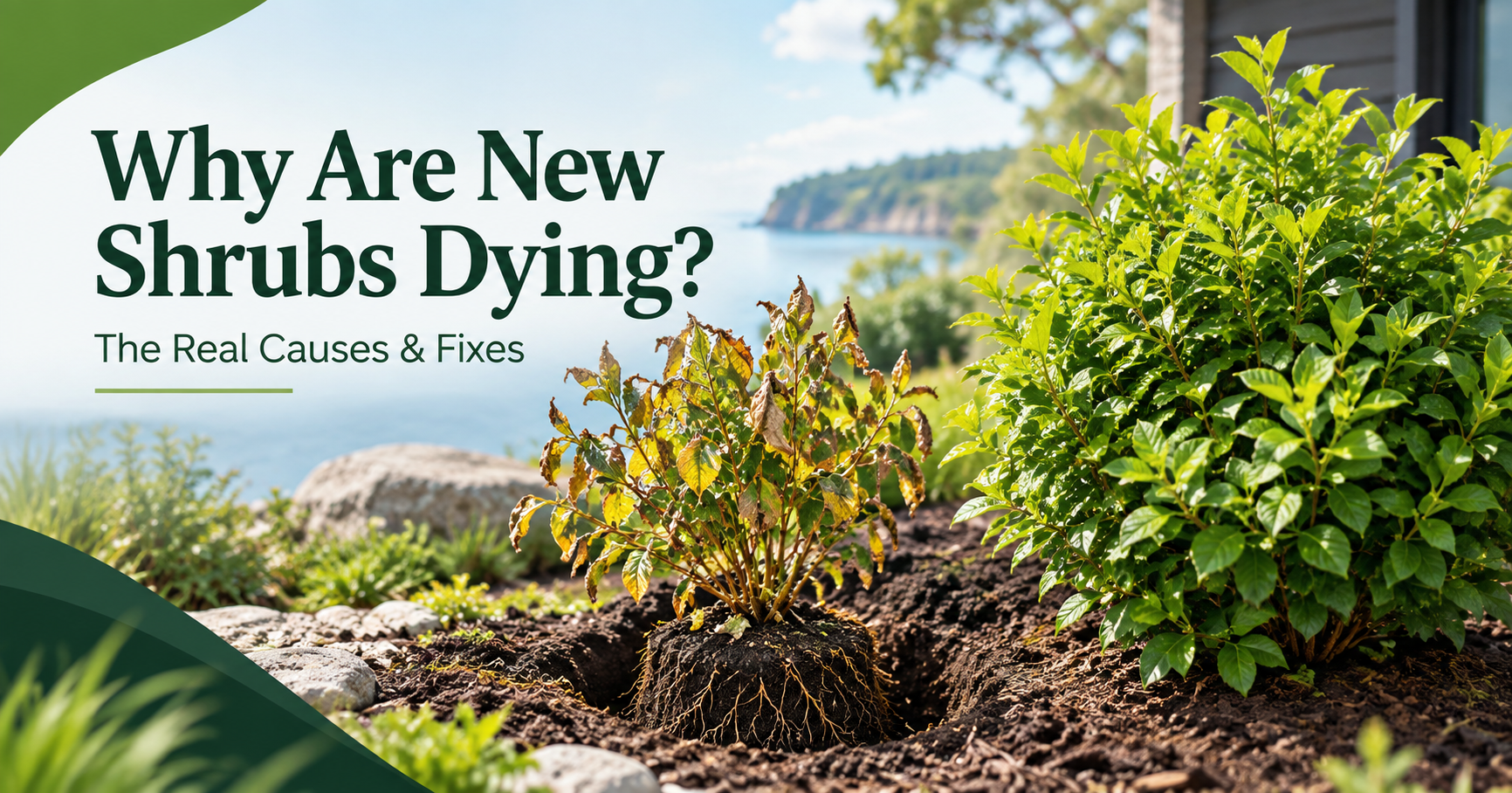
A brand-new shrub goes into the ground looking full and healthy, and three days later the leaves have curled, the color has flattened, and the whole plant looks like it is giving up. That drop-off catches most homeowners off guard, especially in Door County, where thin, rocky soil and constant lake wind add extra strain to anything freshly planted. Ashley’s Property Maintenance LLC sees this pattern every planting season across Ellison Bay yards, and in almost every case the shrub is not dying from disease or a bad batch of nursery stock.
If you are searching for why your new shrubs are dying within days or weeks of planting, the answer usually comes down to a short list of overlapping stressors: transplant shock, uneven watering, incorrect planting depth, compacted soil, and too much sun or wind before the roots have spread. Once you know which one is affecting your plant, the fix is almost always straightforward.
Key Takeaways
- Most new shrubs decline from transplant shock, not disease, the roots simply have not caught up to the leaves yet.
- Watering wrong in either direction (too much or too little) causes more shrub deaths than any pest or fungus.
- Planting depth matters more than most homeowners realize, the root flare should sit level with the soil, not buried.
- Door County’s thin, rocky, fast-draining soil means new plantings often need closer attention than the same shrub would in deeper, richer soil.
What Actually Causes New Shrubs to Die After Planting?
A shrub that struggles after planting is almost always dealing with transplant shock, a temporary condition where the root system cannot yet pull up enough water to support the leaves it grew in the nursery. Wilting, leaf drop, and dull color are the plant’s way of conserving moisture while new roots grow outward into the surrounding soil. In most cases, consistent watering, correct planting depth, and a little patience are all that is needed for recovery.
Transplant Shock Is Normal, Not a Red Flag on Its Own
Every shrub loses some roots when it comes out of a nursery container or root ball, no matter how carefully it was dug. The remaining roots then have to support the full canopy of leaves in a completely new soil environment, with different moisture, temperature, and light than the nursery bed it came from. That mismatch is what causes the wilting, curling, or slight leaf drop you see in the first one to three weeks. It is uncomfortable to watch, but it is a normal, expected phase rather than proof that something has gone wrong.
The bigger question is whether the shrub is simply adjusting or whether an underlying issue, bad drainage, planting depth, or drought stress, is preventing it from adjusting at all. That distinction is where most of this guide is focused.
How Much Water Do New Shrubs Actually Need in Door County Soil?
Newly planted shrubs typically need daily watering for the first one to two weeks, watering every two to three days through about the twelfth week, and weekly watering after that until the root system has spread as wide as the shrub’s canopy. According to the University of Minnesota Extension, shrubs planted in northern climates similar to Wisconsin generally take two full growing seasons to reach that established root spread.
That schedule matters more in Door County than in many other parts of the state. The peninsula’s soil is often shallow over limestone bedrock, so it drains fast and dries out faster than the deeper loam found further inland. A shrub that would tolerate a missed watering in richer soil can dry out within a day here, particularly on a south-facing bed exposed to wind off Lake Michigan.
As one Penn State Extension horticulture resource puts it plainly, “Lack of water is the number one reason newly planted trees do not survive.” The same holds true for shrubs, inconsistent watering causes more early plant loss than any pest, fungus, or nursery defect.
Overwatered or Underwatered? How to Tell the Difference
Both extremes produce wilting leaves, which is exactly why so many homeowners respond to a stressed shrub by watering more, even when the soil is already saturated. Checking the soil, not just the leaves, is the only reliable way to tell which direction the problem is going.
| Symptom | Overwatering | Underwatering |
| Soil feel at 4–6 inches deep | Wet, soggy, or muddy | Dry, crumbly, pulls away from roots |
| Leaf appearance | Yellowing, soft, sometimes with a sour smell at the base | Curling, browning at the tips and edges |
| Root color when checked | Brown, mushy, foul-smelling | Pale tan, dry, brittle |
| Correct response | Stop watering, improve drainage, loosen surrounding soil | Water slowly and deeply, add mulch to hold moisture |
Could the Shrub Be Planted Too Deep or Too Shallow?
Planting depth is one of the most common mistakes behind new shrubs dying, and it is also one of the easiest to check. Every woody plant has a root flare, the point where the trunk or main stems widen out into the roots. That flare needs to sit level with the surrounding soil, not buried under it.
A shrub planted too deep keeps its lower stem constantly damp, which invites rot at the base and cuts off oxygen to the upper roots. A shrub planted too shallow leaves roots exposed to drying air, so they struggle to anchor the plant and pull up water. Both situations look similar from a distance, a shrub that just is not thriving, but the fix is different for each.
The 3-Check Method
Use this quick framework any time a new shrub looks off, and work through it in order:
- Soil check: Dig down 2 to 3 inches near the root ball. Moist and crumbly is good; soaked or bone-dry means adjust watering before doing anything else.
- Flare check: Find where the stem widens into roots. If it is buried under soil or mulch, gently pull material back until it sits level with the ground.
- Leaf check: New buds, flexible stems, and stable color mean the plant is adjusting. Mushy stems, foul odor at the base, or widespread leaf drop with no new growth after several weeks point to a deeper problem.
Your First 14 Days After Planting: A Simple Action Plan
The first two weeks set the tone for how well a shrub establishes. Follow these steps in order:
- Water thoroughly on planting day so the entire root ball is saturated, not just the surface soil.
- Check soil moisture daily by feeling 2 to 3 inches down, and water again only when it starts to dry out.
- Confirm the root flare sits level with the soil, and adjust immediately if it does not.
- Apply 2 to 3 inches of mulch around the base, keeping it a few inches away from the stems.
- Provide afternoon shade or a windbreak for the first one to two weeks if the shrub sits in a hot, exposed, or windy spot.
- Hold off on fertilizer until you see new growth, feeding a stressed root system can do more harm than good.
What Door County Homeowners Get Wrong With New Plantings
A few mistakes show up again and again in yards across Ellison Bay and the surrounding peninsula, and most of them are easy to correct once you know what to look for.
Do this, not that: Water deeply and less often, not lightly and every single day. A quick daily sprinkle wets only the top inch of soil and encourages roots to stay shallow, which leaves the plant more vulnerable to drought later in the season.
Other common missteps include:
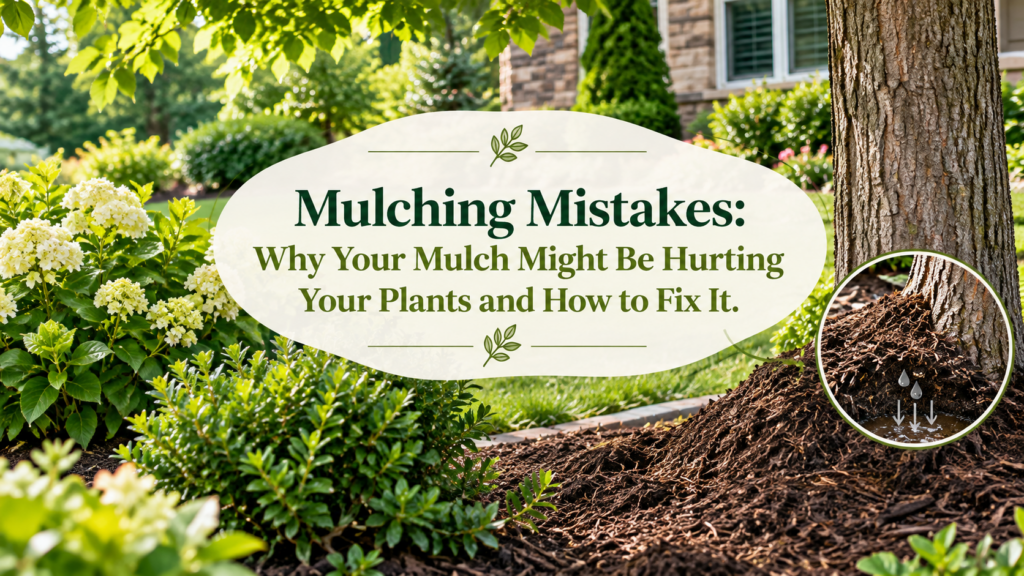
- Piling mulch against the stem instead of leaving a gap, which traps moisture against the bark and invites rot.
- Fertilizing at planting time to “help the plant along,” when a stressed root system usually cannot process the extra nutrients and can be burned by them instead.
- Giving up too early. A shrub that looks rough after two or three weeks is often still within a normal adjustment period, not in terminal decline.
- Ignoring the site conditions and planting a sun-loving shrub in a shaded spot, or a moisture-loving variety in a fast-draining, rocky bed.
A Typical Door County Planting Scenario
Picture a homeowner who plants three hydrangeas along a south-facing wall in early July, watering them the same amount as the rest of an established flower bed. Within a week, the leaves droop every afternoon and the edges start to brown. This is a common, illustrative example rather than a specific client case, but it plays out often on the peninsula: the surrounding bed has deep, settled roots that need very little supplemental water, while the new hydrangeas have almost no root spread yet and are pulling moisture from a much smaller area of soil. Once watering is adjusted to target just the new root balls, with a bit of afternoon shade for the first two weeks, the same shrubs typically recover and settle in within a season.
When to Call a Landscaping Professional for Struggling Plants
Most transplant stress resolves with consistent watering, correct depth, and a little patience. It is worth bringing in help when a shrub shows mushy roots, a foul smell at the base, widespread leaf drop with no new buds after several weeks, or when several plants in the same bed are struggling at once, since that pattern usually points to a soil or drainage issue rather than one unlucky plant.
Ashley’s Property Maintenance LLC handles planting, bed preparation, and ongoing landscape maintenance for homes and businesses throughout Ellison Bay and Door County. Because the peninsula’s soil varies so much from one property to the next, shallow and rocky in some yards, heavier and slower-draining in others, our team checks drainage and site conditions before recommending plant placement, so new shrubs and trees start out with a better chance of settling in without the stress described above.
Final Thoughts: Give New Plants Time and the Right Conditions
New shrubs are rarely dying for a mysterious reason. Nearly every case comes back to water, depth, soil, or exposure, and each of those is something you can check and correct within a day or two of noticing a problem. Once the guesswork around why your new shrubs are dying is out of the way, most homeowners find that a shrub they nearly gave up on comes back stronger the following season.
Patience matters as much as technique here. A shrub that looks rough in its first month is not necessarily failing, it may simply be doing the slow, invisible work of building roots before it puts energy into new growth above ground. Keep the soil evenly moist, keep the flare uncovered, and give it a full season before deciding whether it needs to be replaced.
If a bed keeps producing struggling plants no matter what you try, that is usually a sign to look at the soil and site conditions rather than the plants themselves. A short conversation with someone who works with Door County soil regularly can save a season of trial and error.
Ready for Help With Your Door County Landscape?
If a new shrub or planting bed is not bouncing back the way you expected, Ashley’s Property Maintenance LLC can take a look at what is going on and handle the planting, soil, and ongoing care from there. We work with homeowners and commercial properties throughout Ellison Bay and Door County who want their landscape to actually take root, not just survive the first season. Request an estimate and tell us what your yard needs.
Frequently Asked Questions
Why is my new shrub wilting even though I water it every day?
Daily light watering often wets only the top inch of soil, leaving the deeper roots dry. Water more deeply and less frequently instead, soaking the full root ball, and check soil moisture with your finger before each watering.
How long does transplant shock last in shrubs?
Mild transplant shock usually fades within two to three weeks. Some shrubs, especially larger or bare-root plants, can show stress for a full growing season while their root systems catch up to their canopy.
Should I cut back a wilted shrub after planting?
Remove only dead or broken stems at first. Leaves help the plant generate energy for recovery, so heavy pruning right after planting can slow root establishment rather than help it.
Is it normal for shrub leaves to turn brown at the edges after planting?
Yes, slight browning at the leaf edges is a common sign of mild drought or wind stress in newly planted shrubs. Consistent watering and a windbreak for the first week or two usually resolve it.
How do I know if my shrub is planted too deep?
Look for the root flare, the point where the stem widens into roots. If it sits below the surrounding soil line or is covered by mulch, the shrub is likely planted too deep and should be raised.
What is the best time of year to plant shrubs in Door County?
Spring and early fall generally offer the most agreeable temperatures for new plantings in this region, since cooler air reduces water loss through the leaves while roots establish. Summer planting is possible but requires closer attention to shade and watering.
Can overwatering kill a new shrub as easily as underwatering?
Yes. Waterlogged soil pushes oxygen away from the roots, which leads to rot and can kill a shrub just as effectively as drought. Checking soil moisture before every watering helps avoid both extremes.
Do I need to fertilize a new shrub right after planting?
Usually not right away. A stressed root system can be damaged by added fertilizer salts, so it is better to wait until you see new growth, then feed lightly if needed.
Does Ashley’s Property Maintenance LLC help with plants that are already struggling, not just new installations?
Yes. Alongside new plantings, our team provides ongoing landscape maintenance and can assess an existing bed where plants are declining, checking soil, drainage, and site conditions to recommend next steps.