Snow starts falling overnight, and by morning the driveway that looked manageable at bedtime may already be packed, drifting, or difficult to clear.
That is usually when homeowners start wondering, how does snow removal service work when the amount of snow, timing, temperature, and road conditions can change from one storm to another?
Professional snow removal is not simply a truck arriving after snow stops. The service is usually built around an agreed snow depth, the areas that need clearing, the type of driveway, the timing of visits, ice conditions, and the billing arrangement.
For homeowners in Ellison Bay and nearby Door County communities, Ashley’s Property Maintenance LLC provides year-round outdoor property care, including residential snow removal and snow plowing services for approved driveways, sidewalks, and walkways.
Key Takeaways
- A snow removal trigger determines when service begins and can also affect how many visits occur during one storm.
- One long snowfall can require more than one service visit, so one storm does not always mean one charge.
- Driveway material, obstacles, snow storage space, municipal plows, drifting, ice, and refreezing can change how the property must be cleared.
- The best time to understand your service plan is before the first significant snowfall, not while crews are already working their winter routes.
How Does Snow Removal Service Work During a Winter Storm?
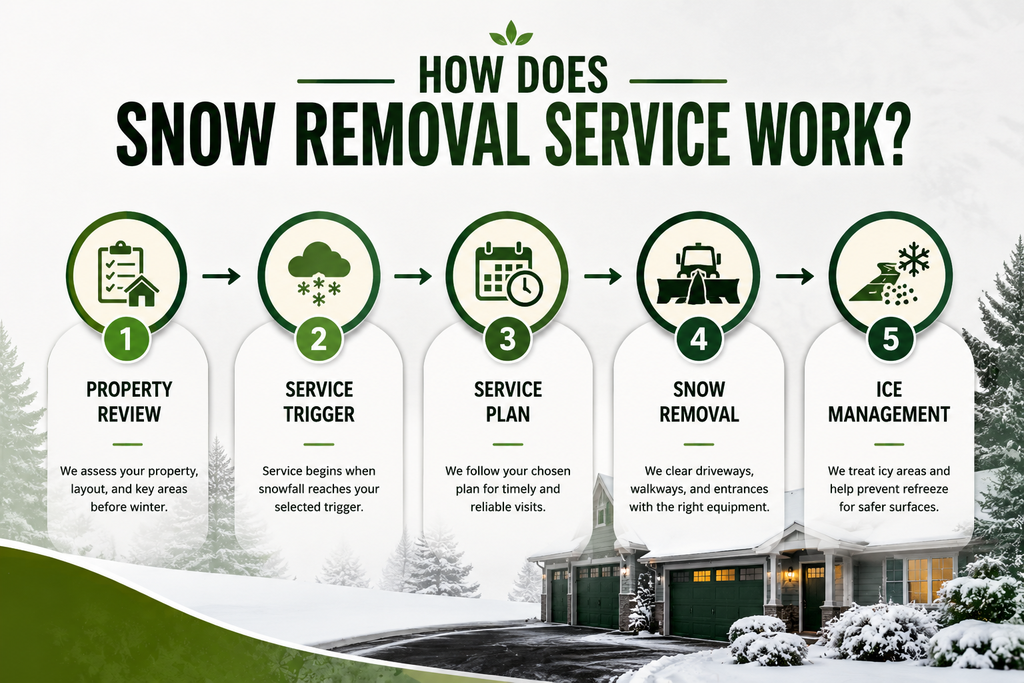
A residential snow removal service usually starts with an agreement made before the storm. The homeowner identifies the areas that need clearing, selects the service arrangement, and confirms when service should begin. Once snowfall reaches the agreed trigger, crews clear the approved areas according to weather conditions, route timing, property access, and the selected billing plan.
The process usually follows five practical stages.
1. The Property Is Reviewed Before Snow Becomes a Problem
The contractor needs to understand more than the driveway address.
Important details include:
- Driveway size and shape
- Walkways and entrances
- Sidewalks
- Driveway surface
- Curbs and landscape edges
- Drainage areas
- Places where cleared snow can be piled
- Decorative stone, islands, or planting beds
- Gates, wires, hoses, and other obstacles
A clear property plan helps the crew know what should be cleared and which areas require extra care.
2. The Service Trigger Determines When Clearing Starts
A trigger is the amount of snow that activates the service.
The trigger matters because a light dusting and a major storm may require completely different responses. It also affects the number of visits a homeowner may receive during prolonged snowfall.
3. Crews Work According to the Selected Service Plan
Automatic service, end of storm service, seasonal arrangements, and on-demand requests do not operate the same way.
That difference affects both timing and billing.
4. Snow Is Cleared Using Equipment Appropriate for the Property
Plows may work well on suitable paved driveways, while shovels or snow blowers may be needed around entrances, walkways, detailed areas, or surfaces where a plow could cause damage.
5. Ice Conditions May Need Separate Attention
Removing snow and managing ice are related, but they are not the same job.
Snow may melt during the day and refreeze later. Freezing rain can also create slippery conditions without producing enough snow to require plowing.
The National Weather Service advises homeowners to prepare for winter conditions before storms arrive and to avoid unnecessary overexertion when clearing heavy snow themselves.
What Does a Snow Removal Trigger Mean?
A snow removal trigger tells the contractor when the property should enter the service cycle.
For example, Ashley’s residential service terms allow homeowners to select from snowfall trigger ranges such as:
- 1 to 2.9 inches
- 3 to 5.9 inches
- 6 to 8.9 inches
The important part is understanding what happens after the trigger is reached.
With automatic snow removal, service can occur approximately every time the selected accumulation threshold is reached.
An Illustrative Example
Suppose a homeowner selects a 2 inch trigger and the storm eventually produces 6 inches.
Under an automatic trigger arrangement, the property could receive approximately three visits as the snowfall builds.
That means the homeowner should not assume:
One storm = one visit.
The service follows the trigger, not simply the number of storms listed on the weather report.
With an end of storm arrangement, the same snowfall may be handled differently because service is based on the final accumulation and the timing of the storm.
The Four Things to Confirm Before Winter
Use four simple questions when reviewing any snow removal agreement:
Trigger: How much snow starts the service?
Timing: Will the property be cleared during the storm or after it?
Treatment: Is ice melt or deicing included?
Terrain: Is the driveway asphalt, concrete, gravel, pavers, steep, narrow, curved, or surrounded by obstacles?
Those four details explain far more about a snow removal plan than the headline price alone.
How Are Residential Snow Removal Services Billed?
Snow removal billing can vary because weather is not predictable.
A winter with frequent small snowfalls may produce a different number of visits than a winter with fewer but much larger storms.
Here is how Ashley’s residential service arrangements can differ:
| Service Option | How It Works | How Billing Works |
| Auto Snow Removal | Homeowner chooses a snowfall trigger. Service occurs approximately each time that trigger is reached. | Charged for each service visit. Ice melt is included. |
| Season Prepay | A preset number of visits is purchased for the winter based on the selected trigger. | The supplied service plan provides a discounted seasonal rate, with additional visits billed at the same discounted service rate after the preset visits are used. |
| End of Storm | Service occurs approximately at the end of each snow day or when accumulation reaches the plan’s maximum service interval. | Billing is based on the total applicable snowfall amount. |
| Email When Needed | Homeowner requests service instead of being placed on the automatic route. | Treated as emergency service under the supplied policy and may cost more than scheduled service. Automatic customers receive route priority. |
For season prepay service, the supplied plan bases the preset number of visits on the selected snowfall trigger. The lower the trigger, the more preset visits are included because smaller amounts activate service more often.
This is why homeowners should compare snow removal plans by how the service works, not only by the quoted total.
What Is Usually Included in Residential Snow Removal?
Ashley’s supplied residential snow removal scope includes:
- Driveway clearing
- Walkway to the front door
- Sidewalks, subject to stated conditions
- Ice melt application
Several situations can fall outside that standard scope.
Snow Pushed Back by Municipal Plows
Street plows may create a hard packed ridge of snow and ice across the entrance to a driveway after private snow clearing has already taken place.
Removing that compacted material can require extra work and may be billed separately.
Sidewalk Conditions
Sidewalk clearing may also need separate treatment when a municipal plow pushes snow onto the walkway or when the sidewalk has already become heavily iced.
Mailboxes and Vehicles Along the Street
Clearing around mailboxes or vehicles parked in the street is not part of the standard snow removal scope under the supplied service terms.
Extra work around those obstacles may require additional time.
Is Snow Removal the Same as Deicing?
No. Snow removal physically moves accumulated snow. Deicing addresses ice or frozen precipitation on the surface.
A deicing only visit may involve applying an ice melt product without performing snow removal.
Timing matters because ice control often works better when the product is applied before precipitation becomes firmly bonded to the pavement.
It is also worth avoiding the idea that more deicer automatically produces a better result.
The Wisconsin Department of Natural Resources’ January 2026 winter salt guidance reported that 38% of Wisconsin community wells had exceeded the state health department’s recommended sodium level for people on low salt diets at least once since 2004.
Shannon Haydin, Wisconsin DNR Storm Water Section Manager, also cautioned:
“Chlorides persist in the environment forever and cause significant impacts to fish, aquatic life and human health.”
The UW Madison Division of Extension’s 2025 guidance on deicing salt damage similarly recommends removing as much snow as practical before applying deicing materials and considering where salty meltwater will drain or where treated snow will be piled.
The practical lesson is simple: clear the snow first, then treat ice where treatment is actually needed.
Does the Type of Driveway Change Snow Removal?
Yes. The surface can completely change the equipment and approach.
Paver Driveways
Why pavers need special handling
Homeowners should tell the snow removal company about a paver driveway before winter service begins.
Ashley’s supplied policy calls for snow blowers and shovels rather than ordinary plowing on paver driveways because a plow can damage the surface.
That information should never be left for the crew to discover underneath fresh snow.
Gravel Driveways
Why some snow may remain
Gravel requires a different approach.
A plow blade cannot simply ride against gravel the same way it can on a suitable hard surface. The blade may need to remain raised to reduce the chance of digging into the driveway and moving gravel into nearby lawn or planting areas.
Because of that limitation, a thin layer of snow may remain in certain areas.
The goal is not to scrape gravel as though it were concrete. The goal is to restore practical access while limiting surface damage.
What Should Homeowners Do Before the First Snowfall?
Preparing the property before winter can save time when crews are working during difficult weather.
1. Choose Your Service Trigger
Decide how much accumulation you are comfortable with before service begins.
A lower trigger generally means more frequent service.
2. Mark Driveway and Walkway Edges
Ashley’s supplied winter policy calls for 36 inch orange snow stakes around driveway edges, walkways, sidewalks, curbs, islands, decorative stone, lawn edges, and other features that may disappear beneath snow.
Hidden objects are difficult for equipment operators to avoid.
3. Tell the Contractor About the Surface
Identify pavers, gravel, uneven areas, drainage structures, and other conditions before snow covers them.
4. Remove Movable Obstacles
Move hoses, wires, tools, decorations, portable equipment, and other items away from approved clearing areas.
5. Decide How You Want Ice Handled
Ask whether ice treatment is automatic, included with snow removal, available as a separate service, or performed only when requested.
6. Plan Where the Snow Can Go
The first storm may leave plenty of room beside the driveway.
Repeated storms can gradually reduce that space.
Think about snow storage before piles begin narrowing the driveway, covering drainage areas, or pressing against sensitive landscaping.
For broader seasonal preparation, Ashley’s landscape maintenance services in Ellison Bay can address established outdoor areas, while the existing Landscape Maintenance Checklist covers winter preparation such as marking driveway edges, planning snow storage, monitoring drainage, and checking the property after snow and ice events.
What Do Homeowners Commonly Get Wrong About Snow Removal?
Mistake 1: Assuming One Storm Means One Charge
A long storm can cross the selected trigger several times.
Do this: Ask how repeated accumulation affects service visits.
Not that: Assume every weather event produces only one invoice line.
Mistake 2: Waiting Until Snow Is Already Falling
Automatic customers are already part of a planned route.
Last minute requests may receive lower priority and can cost more under an emergency service policy.
Do this: Arrange winter service before dependable access becomes urgent.
Not that: Wait until the driveway is already blocked.
Mistake 3: Expecting Every Surface to Be Scraped Bare
Snow removal equipment must match the driveway material.
Gravel, pavers, curves, slopes, and hidden obstacles may limit how closely equipment can clear.
Mistake 4: Leaving Property Features Unmarked
Landscape borders, drains, curbs, decorative stone, and lawn edges may be obvious in October and almost invisible after several inches of snow.
Mark them before winter.
Mistake 5: Treating Snow and Ice as the Same Problem
Plowing moves snow.
Deicing deals with frozen material that remains or forms afterward.
Some winter events may need one service, while others need both.
For more on why winter clearing matters beyond convenience, see Ashley’s existing guide to pressure washing, snow removal, and property safety.
How Can You Compare Snow Removal Services Before Hiring?
Price matters, but it should not be the only question.
Ask the contractor:
- What snowfall depth activates service?
- Can one storm produce multiple visits?
- What parts of my property are included?
- Are sidewalks and front walkways covered?
- Is ice melt included?
- What happens after melting and refreezing?
- How are paver or gravel driveways handled?
- Where will cleared snow be placed?
- What happens if a street plow blocks the driveway again?
- What happens if I request service during the storm instead of signing up beforehand?
A clear answer to those questions helps you compare the actual service instead of comparing two prices that may cover very different work.
Snow Removal Services in Ellison Bay and Door County
Winter access is easier to manage when the service arrangement is decided before snow begins accumulating.
Ashley’s Property Maintenance LLC is based in Ellison Bay and provides residential and commercial outdoor property care across its confirmed Door County service area. Its winter service covers approved residential and commercial snow clearing needs, including driveways, walkways, and sidewalks.
Homeowners considering service should discuss the property layout, driveway material, preferred trigger, snow placement, access points, and ice control needs before the season.
That conversation gives both the homeowner and the snow removal crew a much clearer picture of what should happen when the next storm arrives.
Final Thoughts
Professional snow removal works best when expectations are settled before the weather changes.
The most important details are not complicated: know your trigger, understand when crews will visit, confirm what is included, identify the driveway surface, mark hidden obstacles, and understand how the billing plan responds to larger storms.
Once you understand how does snow removal service work, it becomes much easier to compare plans and choose an arrangement that fits how you actually use your property during winter.
If dependable winter access matters to your home or business, review the property and service plan before the first major snowfall rather than trying to make those decisions in the middle of one.
Ready to Prepare Your Property for Winter?

If you want a clearer plan for keeping your driveway and important walking routes accessible, talk with Ashley’s Property Maintenance LLC before winter conditions arrive.
Review the property, select the appropriate service arrangement, and confirm the areas you want covered.
Request a snow removal estimate from Ashley’s Property Maintenance LLC or call 920-412-8204 to discuss winter service in Ellison Bay and the confirmed Door County service area.
Frequently Asked Questions
How much snow must fall before snow removal starts?
The amount depends on the trigger selected in your service arrangement. Ashley’s supplied residential options include several accumulation ranges, allowing homeowners to choose when service should begin. A smaller trigger usually activates service more often than a larger trigger.
Can one snowstorm result in several snow removal visits?
Yes. A prolonged storm can produce multiple visits when an automatic service plan is based on recurring accumulation. For example, if snowfall repeatedly reaches the selected trigger, crews may return during the same storm instead of waiting until all precipitation ends.
Does a snow removal company come during the storm or afterward?
It depends on the service plan. Automatic service may take place while snow continues accumulating, while an end of storm arrangement may schedule clearing later based on the storm’s total snowfall and weather conditions. Confirm the timing before winter begins.
Is ice melt included with snow removal?
Ashley’s supplied standard residential snow removal terms include ice melt application. Deicing only service can also be used when snow removal itself is not needed. Homeowners should still confirm the current scope in their individual quote or service agreement.
Why might my driveway be blocked again after it was already plowed?
Municipal street plows can push hard packed snow and ice back across the end of a private driveway after the property has already been serviced. Under Ashley’s supplied policy, removing that additional compacted material may involve an extra charge.
Can a paver driveway be snow plowed?
Ashley’s supplied policy calls for snow blowers and shovels on paver driveways rather than standard plowing. Homeowners should identify a paver surface before service begins so the crew can plan the correct clearing method before the driveway is covered.
Can a gravel driveway be plowed?
Yes, but gravel requires more care than a suitable hard surface. The blade may need to stay raised to limit gravel displacement. That means some thin or uneven snow coverage may remain where closer scraping could damage the driveway.
When should I arrange snow removal service?
Arrange service before winter access becomes urgent. Planning early gives time to select a trigger, discuss driveway conditions, mark obstacles, identify snow storage areas, and understand billing before crews are already responding to active storms.