That stump may be gone at eye level, but the real decision starts underground.
You can grind a stump until it no longer interrupts mowing or dominates the yard. You can also excavate the stump and major root mass when the space needs a more complete reset. Both approaches can solve a problem, but they do not solve the same problem.
That is why the better way to compare stump grinding vs stump removal is not to ask which method sounds more complete. Ask what you want to do with that part of the property next.
For a homeowner who simply wants an old stump out of the lawn, grinding may provide exactly the result needed with much less disturbance. If that same location is being prepared for a new tree, patio, structural base, or another project that depends on the ground below the surface, the remaining roots matter much more.
For property owners in Ellison Bay and Door County, Ashley’s Property Maintenance LLC provides stump grinding alongside broader landscaping and property care, which makes that next-use question especially important before work begins.
Key Takeaways
- Grinding and full removal solve different problems. Grinding removes the visible stump while much of the root system remains underground.
- Your future use of the area matters more than the stump itself. Lawn restoration and general landscaping usually have different ground requirements from a patio, structure, or replacement tree.
- More removal also means more disturbance. Excavating the stump and root mass can affect a much larger area than grinding.
- Do not assume what is included. Grinding depth, chips, backfilling, lawn restoration, surface roots, and complete root removal should all be discussed before work starts.
What Is the Real Difference Between Stump Grinding and Stump Removal?
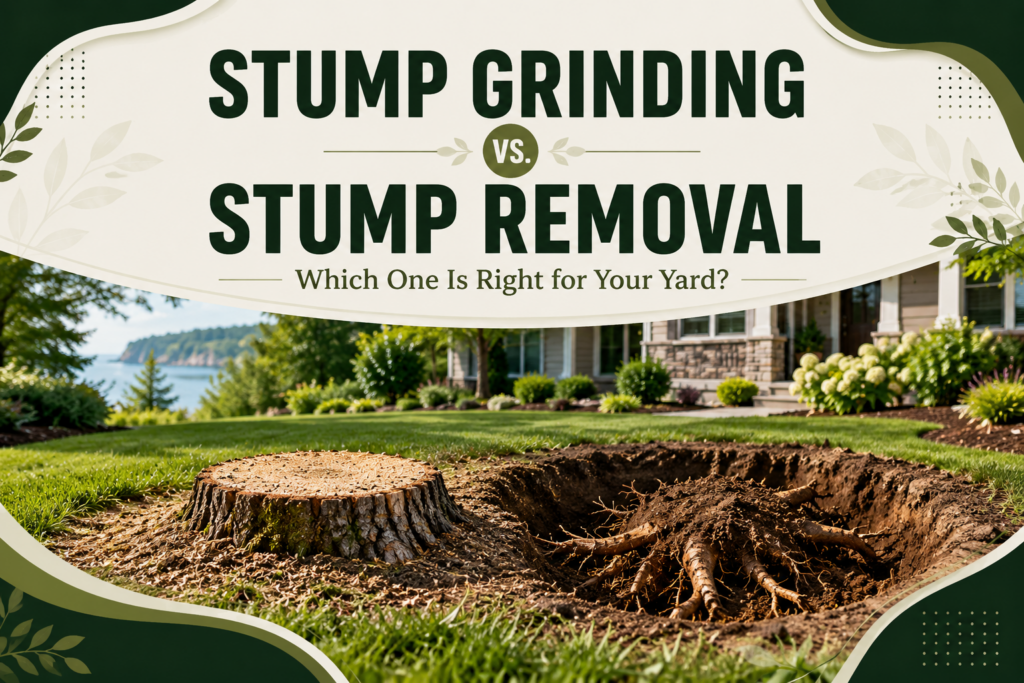
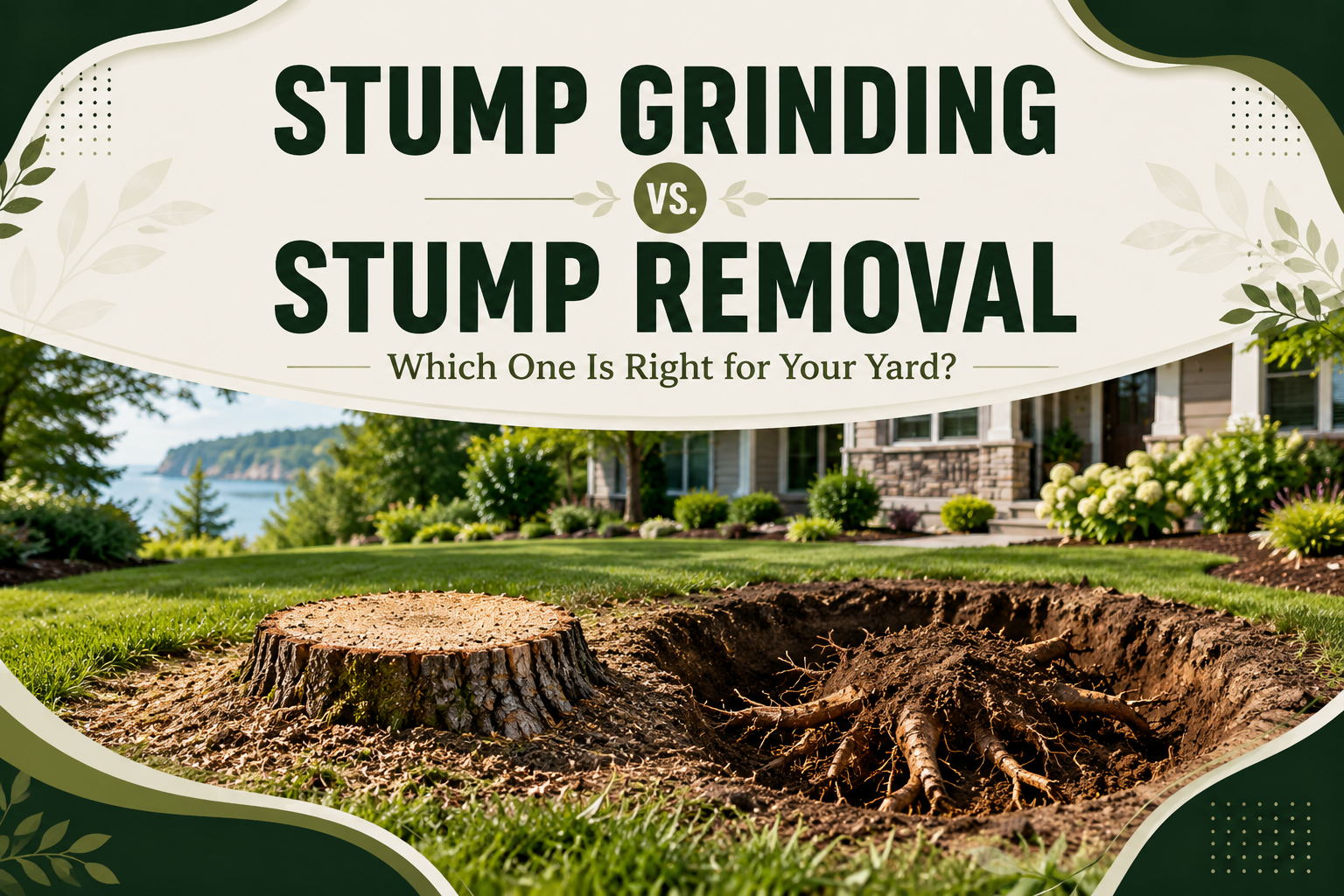
Stump grinding cuts the visible stump down below the surrounding ground while leaving much of the underground root system in place. Full stump removal involves excavating the stump, root ball, and significant roots from the work area. Grinding causes less disturbance. Removal creates more open soil below the former tree.
That distinction sounds simple, but it changes what can reasonably happen in that location afterward.
Stump Grinding
A stump grinder uses a rotating cutting wheel to reduce wood into small chips.
The work concentrates on the stump and, depending on the agreed scope, may also address visible or accessible surface roots. The goal is usually to remove the physical obstacle without excavating the wider root system.
Once the stump is below grade, the area can be cleaned, filled appropriately, and considered for lawn or landscape work.
Roots that remain underground gradually break down.
Iowa State University Extension describes professional grinding as:
“The quickest, easiest, and safest way to remove a tree stump is by hiring an arborist to grind it out.”
Read Iowa State University Extension’s stump removal guidance
Here, “remove” refers to eliminating the stump as a usable yard obstruction. That is different from excavating the entire stump and major root mass.
Full Stump Removal
Full removal goes below the visible stump.
The stump is exposed, major connecting roots are separated, and the stump and root ball are pulled or excavated from the soil. The resulting work area is usually larger because equipment needs access around and beneath the root mass.
That approach may make sense when the underground space itself matters.
Construction, a major hardscape project, major grade work, or planting a new tree in nearly the same location can all change the decision.
Does Full Stump Removal Really Mean Every Root Is Gone?
Usually, the practical goal is removal of the stump, root ball, and the major roots affecting the planned work area. It should not automatically be interpreted as excavating every fine root throughout the property.
Tree roots can spread much farther than the stump suggests.
For perspective, University of Minnesota Extension’s root-zone guidance estimates a 32 to 34 foot root spread diameter for a tree with a 12 inch trunk diameter. The figure is intended for estimating irrigation root zones, but it demonstrates how misleading the visible stump can be when judging the underground footprint.
This is one reason a homeowner should ask exactly what “removal” means on an estimate.
Does it mean the root ball?
Does it include major lateral roots within the project area?
Does it include cleanup, soil replacement, grading, or preparation for the next project?
Clear scope matters more than the label.
Stump Grinding vs Stump Removal: Which One Fits What Comes Next?
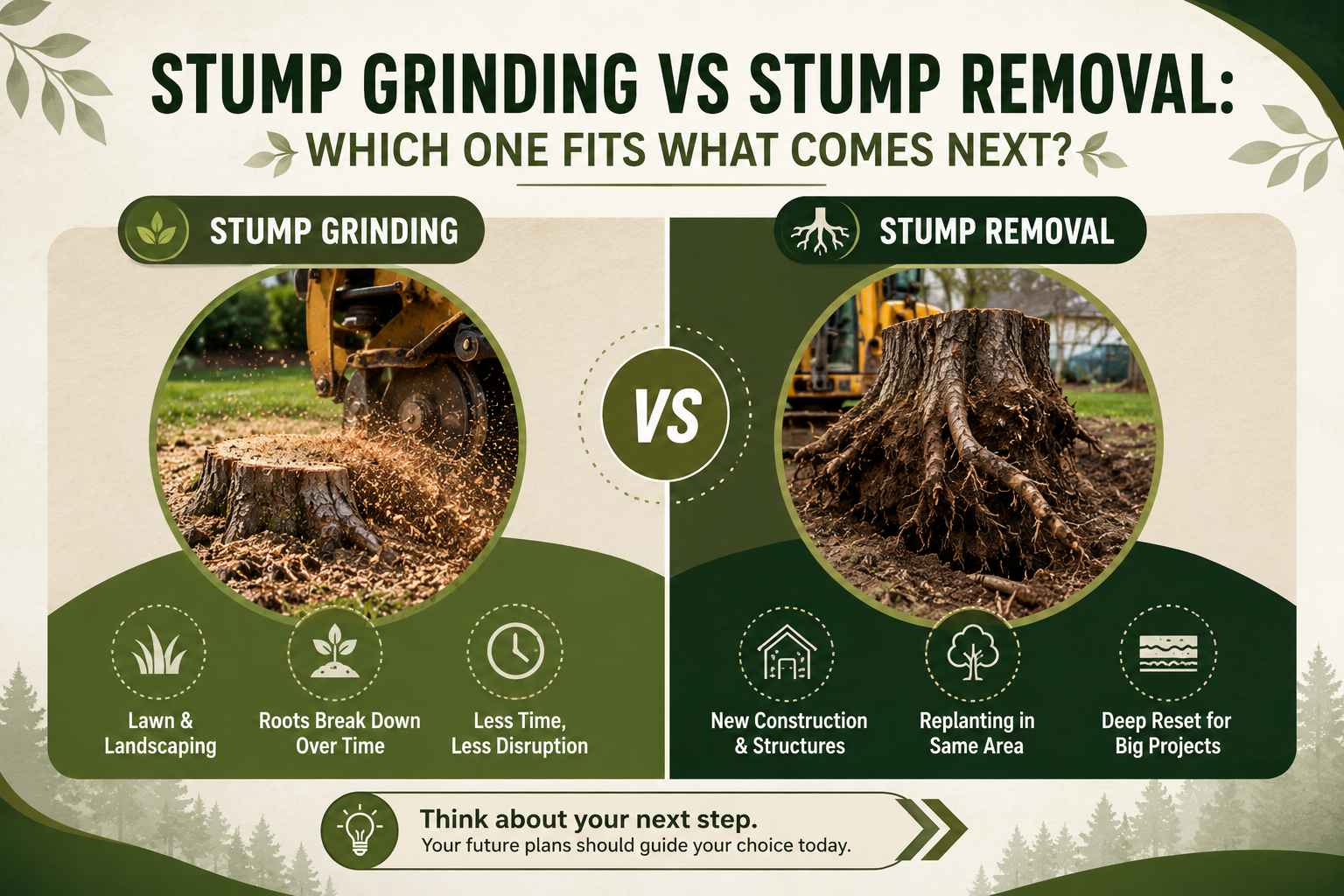
The most useful decision rule is simple:
If the next use mainly depends on the surface, grinding may be enough. If the next use depends on what is below the surface, remaining roots deserve more attention.
| Your Goal | Stump Grinding | Full Stump Removal |
| Remove a mowing obstacle | Strong fit | Usually more disturbance than needed |
| Restore ordinary lawn | Often practical | May be unnecessary |
| Create a mulch or planting area | Often practical | Depends on planting depth and layout |
| Plant a new tree in nearly the same spot | Remaining roots may interfere | More complete soil access |
| Prepare for major hardscape | Needs project-specific review | Often worth discussing |
| Prepare ground for structural work | Remaining wood and roots matter | Excavation may be required |
| Limit disruption to surrounding lawn | Lower disturbance | Higher disturbance |
| Remove the stump and major root mass | No | Yes |
| Keep initial site work simpler | Usually | Usually not |
The table does not replace a site review. Stump size, access, nearby trees, utilities, grade, soil conditions, and the future project can all change the work required.
Should You Grind a Stump If You Only Want Your Lawn Back?
Often, yes.
If the main problem is that the stump interrupts mowing, creates an awkward obstacle, or leaves the lawn looking unfinished, full excavation may solve more of a problem than you actually have.
Grinding focuses on the obstruction.
Afterward, the important part becomes restoration. Leaving a mound of fresh wood chips and treating it like normal soil can create disappointing results. Ground wood behaves differently from mineral topsoil, and remaining underground wood continues breaking down.
If grass is the goal, discuss chip removal, suitable fill material, final grade, and seeding preparation as separate parts of the project rather than assuming they happen automatically.
For Wisconsin lawn timing and establishment considerations, Ashley’s existing guide on when to overseed your lawn can help with the next stage after the area has been properly prepared.
What If You Want to Plant Another Tree in the Same Area?
The decision becomes more complicated.
Grinding removes the stump above and immediately below the surface, but old roots and woody material still occupy soil where the new tree needs room.
Iowa State University Extension recommends moving a replacement tree away from the old stump when possible because the old root system affects soil structure, rooting space, and planting conditions.
That does not mean every replacement tree requires a massive excavation.
It means the location should be planned before the old stump is treated.
Moving the new tree slightly can change the project from a difficult excavation into a much simpler landscape update.
If your goal is to reorganize the wider yard after tree removal, Ashley’s guide to low maintenance front yard landscaping offers useful planning ideas for lawn shapes, planting beds, hardscape, and areas that are difficult to mow.
What If a Patio or Other Hardscape Is Planned Over the Stump?
This is where “just make the stump disappear” can become the wrong instruction.
A patio, paved area, retaining feature, or other improvement relies on preparation beneath the visible surface. Remaining wood can decay, soil can move, and the project may require excavation or base preparation that ordinary stump grinding was never meant to provide.
The correct sequence is to plan the future project first.
Then decide how the stump should be handled.
Grinding first and discovering later that additional excavation is necessary may mean paying to disturb the same location twice.
Ashley’s provides both professional stump grinding services in Ellison Bay and landscaping services for residential and commercial properties. When a stump is connected to a wider yard improvement, discussing the complete area before work starts can make the scope clearer.
Use the Ground-Use Test Before You Choose
1. Decide What Will Occupy the Area Next
Do not begin with the machine.
Begin with the end result.
Grass, a flower bed, another tree, a walkway, and a structural project all place different demands on the ground.
2. Decide Whether the Underground Space Matters
If the surface only needs to become mowable and visually clean, remaining deeper roots may not interfere with the goal.
If digging, compacted base material, footings, or deep planting will occupy the same location, the underground condition matters much more.
3. Look Beyond the Stump Diameter
Visible wood does not show the full root footprint.
Check nearby pavement, retaining features, plantings, buildings, fences, and other trees before choosing a more disruptive excavation approach.
4. Clarify What Happens After the Machine Stops
Ask what happens to the chips.
Ask whether topsoil, grading, cleanup, or lawn restoration is included.
Ask how deeply the agreed stump area will be treated.
Ask whether surface roots are part of the scope.
5. Match the Scope to the Actual Problem
Do not pay for major excavation simply because “full removal” sounds more complete.
At the same time, do not choose basic grinding simply because it sounds easier when your next project requires different ground conditions.
What Most People Get Wrong About Stump Grinding
Mistake 1: Assuming Grinding Removes the Root System
It does not.
Grinding addresses the stump and any specifically included accessible roots. Much of the root network normally stays underground.
Do This, Not That
Do this: Ask what material will remain below and around the work area.
Not that: Assume a stump that is invisible has no roots beneath it.
Mistake 2: Choosing the Method Before Planning the Next Use
A homeowner may grind a stump and only later decide that the exact spot should hold a new patio or tree.
That reverses the planning order.
The future use should determine how the stump is treated.
Mistake 3: Treating Wood Chips Like Finished Lawn Soil
Fresh grindings can fill volume, but a lawn needs suitable growing conditions near the surface.
Discuss chip handling and topsoil rather than assuming the grinder’s debris is the finished lawn base.
Mistake 4: Ignoring Future Settling
Underground woody material changes as it decays.
That matters far more beneath a project that depends on a prepared base than it does beneath an ordinary section of lawn.
Mistake 5: Digging Before Checking Underground Utilities
Full removal may involve excavation around a much larger area than the visible stump.
In Wisconsin, Diggers Hotline instructs homeowners and contractors to contact 811 before digging so underground utilities can be marked.
Review Wisconsin Diggers Hotline safe digging guidance
An Illustrative Example: Same Stump, Two Completely Different Decisions
Imagine a homeowner has an old stump in the middle of an open lawn.
The only goal is to stop steering the mower around it and return the area to grass.
Grinding the stump, properly managing the grindings, restoring the grade, and preparing the surface for turf may solve the complete problem without opening a large excavation area.
Now change one detail.
The homeowner wants a new hardscape feature directly over that location.
The visible stump is no longer the entire issue. The condition of the soil and woody material below the future project becomes relevant.
Same stump.
Different next use.
Different scope.
That is why the right question is not simply “Can this stump be ground?”
It is “What does this ground need to do after the stump is gone?”
When Does Stump Grinding Make the Most Sense?
Stump grinding is especially practical when your goal is to remove a visible obstacle, make mowing easier, improve the appearance of an open lawn, prepare for ordinary landscape changes, or limit excavation around the surrounding yard.
It can also be the more sensible choice when complete root extraction offers no meaningful benefit to the future use of the space.
The word “complete” can sound appealing, but extra disturbance is not automatically extra value.
When Should You Discuss Full Removal Instead?
Discuss excavation when your plan depends on gaining access to the soil occupied by the stump and major root mass.
That may include placing a substantial hardscape or structural feature in the same area, performing major grade work, or putting a new tree where the previous tree stood.
The final decision should reflect the project, not a generic rule.
Equipment access also matters. Excavation may require much more working room than grinding, and the path into the yard can affect nearby lawn, plantings, fences, or other features.
How Ashley’s Property Maintenance LLC Approaches Stump Grinding
Ashley’s Property Maintenance LLC currently offers stump grinding for qualifying residential and commercial properties in Ellison Bay and Door County.
The company’s published service information states that the stump, surrounding ground, property access, nearby features, and future plans are reviewed before the work is defined. It also makes an important distinction: complete root-system removal should not be assumed as part of stump grinding.
That is the right conversation to have before choosing any stump service.
What is the stump interfering with now?
What do you want in that area afterward?
What follow-up work is included?
Those answers define a useful scope far better than simply asking for the stump to “go away.”
Final Thoughts
The stump grinding vs stump removal decision becomes much easier once you stop looking only at the stump.
Grinding usually solves a surface problem. It removes the obstruction while limiting disruption to the surrounding property.
Full removal addresses a deeper site problem by excavating the stump and major root mass from the work area.
Neither approach is automatically the right answer for every yard.
Think about the lawn, planting, hardscape, or other project that comes next. Then choose the stump work that prepares the ground for that specific purpose.
If your main goal is to reclaim part of your lawn or landscape in Ellison Bay or Door County, start by having the stump and surrounding area reviewed rather than choosing a method from the name alone.
Ready to Deal With the Stump That Is Holding Up Your Yard?

If an old stump is interrupting mowing, landscaping, or your next outdoor project, Ashley’s Property Maintenance LLC can review the stump, access, surrounding property, and intended use of the area.
Start with Ashley’s stump grinding service or visit Ashley’s Property Maintenance LLC to discuss the property and request an estimate.
Frequently Asked Questions
Is stump grinding the same as stump removal?
No. Stump grinding cuts the visible stump below the surrounding surface but generally leaves much of the root system underground. Full removal excavates the stump, root ball, and significant roots from the work area. The better choice depends mainly on what you plan to do with the location afterward.
Does stump grinding remove all the roots?
No. Standard stump grinding should not be expected to remove an entire root system. The machine concentrates on the stump and any roots specifically included in the agreed work area. Roots extending farther into the property may remain underground and gradually break down.
Can grass grow where a stump was ground?
Yes, grass can be established over a properly prepared stump area. The grindings may need to be reduced or removed, suitable soil may need to be added, and the surface must be graded for planting. Do not assume the pile of wood chips left by grinding is ready for seed.
Can you plant a new tree where an old stump was ground?
It can be difficult to plant directly in the same location because old roots and woody material still occupy the soil. Moving the replacement tree away from the former stump often provides better planting space. If the exact location must be reused, additional root and soil preparation may be necessary.
Is stump removal better before installing a patio?
A project that depends on prepared soil below the surface deserves a closer site review than ordinary lawn restoration. Remaining roots and decaying wood may conflict with excavation or base preparation. Plan the patio or hardscape first so the required stump work can be determined before grinding begins.
Will roots continue growing after stump grinding?
Roots no longer have the same relationship with the removed tree, but some tree species can produce new shoots from surviving tissue. If regrowth is a concern, identify the tree species and discuss the issue before choosing the treatment rather than assuming grinding alone addresses every root-related problem.
Which option causes less damage to the yard?
Stump grinding generally disturbs a smaller work area because it concentrates on reducing the stump instead of excavating the larger root mass. Full removal requires more soil disturbance and may leave a larger area requiring backfill and restoration. Property access and stump size can still affect either job.
Is stump grinding usually less expensive than full removal?
Grinding commonly requires less excavation, equipment movement, soil handling, and restoration than extracting a stump and root ball. That often makes it the simpler job. Actual pricing should still be based on the stump, access, root conditions, cleanup, grinding scope, and what needs to happen afterward.
What should I ask before hiring someone to grind a stump?
Ask about the approved stump area, grinding limits, accessible surface roots, equipment access, chip removal, backfilling, final grading, and lawn restoration. Also explain your future plans for the site. A contractor cannot properly scope the work if they do not know what you expect to use the area for afterward.
Does Ashley’s Property Maintenance LLC provide full stump removal?
Ashley’s website currently promotes stump grinding and specifically states that complete root-system removal should not be assumed unless separately confirmed. Property owners should describe their intended future use so Ashley’s can explain the applicable stump-grinding scope and related property work.