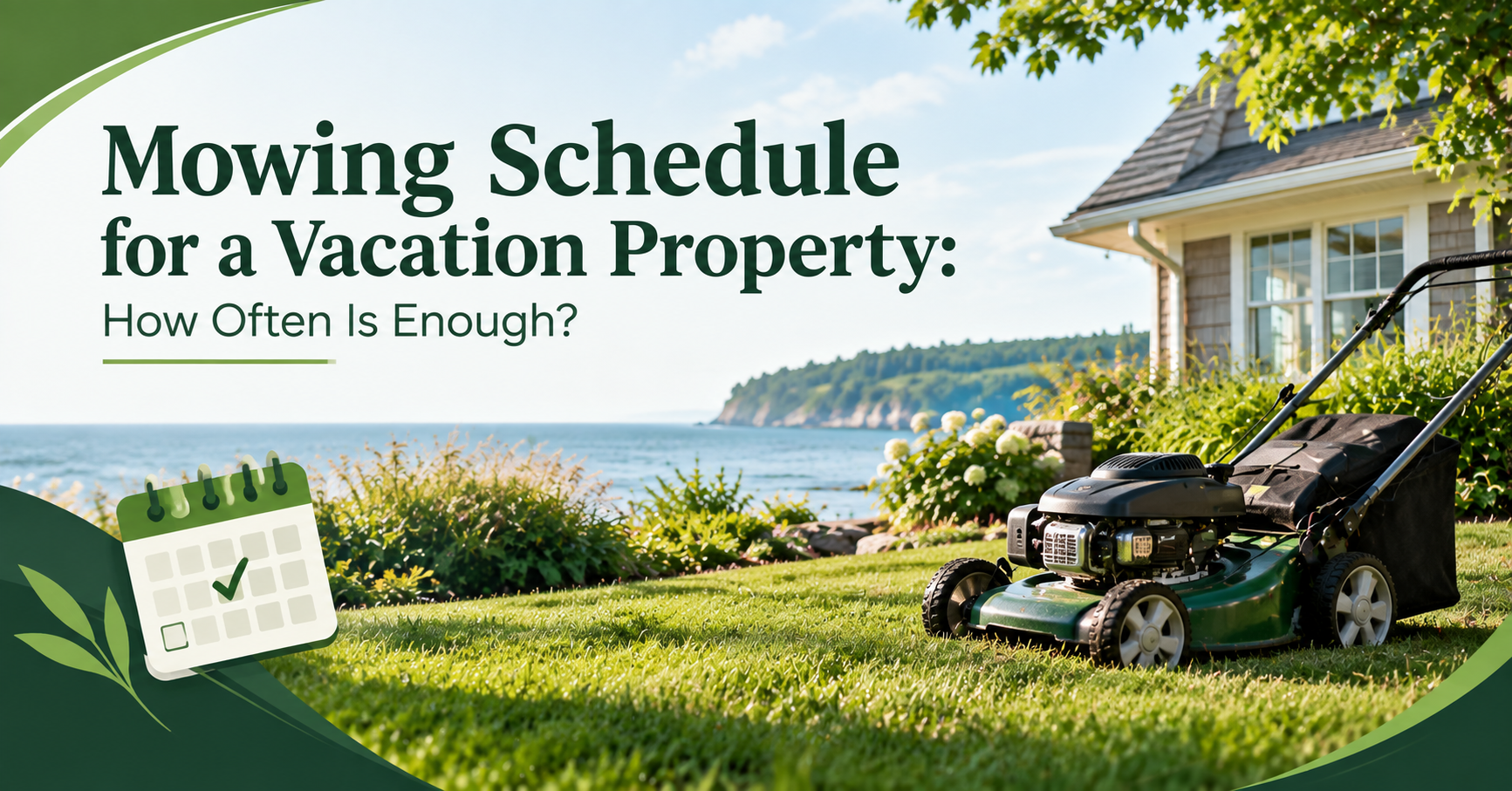
A vacation or seasonal property still grows grass whether anyone is there to see it or not. The right mowing schedule usually lands between once a week and once every two to three weeks, depending on the season, the grass type, and how long the property sits empty between visits. A rigid calendar doesn’t work as well as a schedule that adjusts to actual growth.
Key Takeaways
- Grass keeps growing on an empty property, so “out of sight” isn’t a mowing plan.
- The gap between visits matters more than the day of the week. Longer gaps need a different approach than weekly mowing does.
- An overgrown lawn on a seasonal property signals nobody’s watching it, which affects more than curb appeal.
- University of Wisconsin–Madison Extension recommends keeping lawns between 2½ and 3½ inches and never removing more than a third of the blade at once, and that guidance matters even more when mowings are spaced further apart.
Why an Empty Property Still Needs a Mowing Schedule
Grass doesn’t pause growing because the house is empty. Cool-season lawns, the kind most common in Door County, grow fastest in spring and again in early fall, then slow through the heat of summer. That growth pattern doesn’t care whether anyone is around to notice it.
The difference with a seasonal property isn’t whether the grass grows. It’s that nobody is there to catch the moment it needs cutting. A homeowner living on-site adjusts almost without thinking, mowing a little sooner after a wet week or stretching it out during a dry spell. A property that sits empty for two, three, or more weeks between visits doesn’t get that ongoing feedback, which is exactly why a set schedule matters more here than it does for a full-time residence.
Matching the Schedule to How the Property Is Used
| How often the property is visited | Typical mowing approach | Main risk |
| Weekly or more (regular seasonal use) | Weekly during peak growth, every 10-14 days during slow growth | Skipping a cut lets growth get ahead of the one-third rule |
| Every 2-3 weeks (occasional weekend use) | Scheduled service every 2 weeks through the growing season | Grass grows past the ideal height between visits |
| Rarely visited, mostly unoccupied | Recurring scheduled service regardless of visits, adjusted seasonally | Overgrowth signals a vacant property and lets weeds establish |
| Closed for the off-season | Final cut before dormancy, then paused until growth resumes | Leaving grass too tall going into winter can encourage matting and disease |
What Happens When Mowing Falls Behind on an Empty Lot
An overgrown lawn on a property nobody’s actively using does more than look neglected. Tall, thick grass creates cover for ticks and other pests, and once weeds get a foothold in unmowed turf, they’re harder to remove than to prevent. On a property meant for occasional relaxation, arriving to a yard that needs a full afternoon of catch-up work before you can enjoy it defeats part of the reason for having the place.
There’s also a simpler issue: an overgrown yard is one of the clearest visual signs that a property sits empty most of the time. That’s worth considering for a vacation home, whether the concern is general upkeep, resale value down the road, or just not wanting the place to stand out on the street for the wrong reason.
A Simple Way to Set the Right Schedule
Instead of picking a random interval and hoping it works, run the property through three questions:
Read the season. Cool-season grass grows fastest in spring and fall and slows in summer heat. The schedule should follow that curve, not stay fixed year-round.
Read the visit gap. A property visited weekly can be mowed reactively. A property visited monthly needs a recurring service that doesn’t depend on the owner being there to notice growth.
Read the grass, not the calendar. The one-third rule still applies here: never cut off more than a third of the blade height at once, which means the longer the gap since the last mow, the more that cut needs to be handled in stages rather than all at once.
Practical Steps for Setting Up a Schedule
- Identify your grass type and typical growing season, since cool-season lawns common in Door County have different peak growth windows than warm-season grass further south.
- Estimate how often you’ll actually be on-site this season, and be honest about it rather than assuming you’ll visit more than you do.
- Set a recurring service for the growing season rather than calling only when the yard looks bad, especially if visits are infrequent.
- Plan for a pre-season cleanup mow if the property sat unmowed over winter, since a single overdue cut may need to happen in stages.
- Schedule a final cut before the property closes for the season, timed to when growth is slowing rather than a fixed date.
- Reassess mid-season if weather brings an unusually wet or dry stretch, since growth rate shifts with it.
Common Mistakes With Vacation Property Mowing
Assuming “nobody sees it” means it doesn’t matter. Grass keeps growing at the same rate whether the property is occupied or not, and letting it go longer just means a harder catch-up job later.
- Do this: Treat an empty property’s mowing schedule as more important than an occupied one’s, not less.
- Not that: Skipping service until the next visit reveals how overgrown things got.
Trying to fix months of growth in one mow. Cutting an overgrown lawn straight down to the target height in a single pass stresses the grass and can leave it patchy or yellowing.
- Do this: Bring an overgrown lawn down gradually over more than one mowing.
- Not that: Scalping it in one visit because it’s been too long since the last cut.
Scheduling by date instead of by growth. A flat “every three weeks, no matter what” plan works fine in slow-growth stretches and badly during a rainy spring.
- Do this: Build in flexibility for peak growth periods.
- Not that: Locking the schedule to a fixed interval all season long.
Is This a DIY Job or Worth Scheduling a Service?
DIY may be reasonable when:
- You or a trusted neighbor visit the property often enough to judge growth in person
- The lawn area is small and manageable in a single visit
- You have reliable equipment stored on-site or nearby
- Missing a mowing occasionally wouldn’t cause a real problem
A scheduled service is usually the better fit when:
- The property sits empty for weeks at a time between your visits
- You live far enough away that a quick check-in isn’t realistic
- You want the lawn presentable whenever you or guests do arrive
- You’ve had overgrowth get away from you before
If you’re weighing this, the honest question is less “can I do it myself?” and more “will I actually be there often enough to do it on time.”
A Realistic Example
Picture a lake cottage visited most weekends from May through September but left completely alone from October through April. During the growing season, weekly mowing keeps pace easily. The harder stretch is right after the property reopens in spring, when a winter’s worth of early growth is already ahead of schedule before the first visit even happens.
This is an illustrative example, not a specific project, but it reflects a pattern common to seasonal Door County properties: the biggest mowing challenge usually isn’t the routine season, it’s catching up after a long gap.
Seasonal Property Mowing in Door County
Door County has a high concentration of seasonal and vacation homes, which makes this a more common question here than in a market where most houses are occupied year-round. A few things matter specifically for that pattern:
- The growing season is shorter than in warmer regions, so spring growth can arrive quickly and unevenly once temperatures rise.
- Many properties reopen for the season already behind on mowing, since grass grows through spring whether or not anyone visits.
- A final fall cut before closing up for the season sets the lawn up better for winter than leaving it long going into snow cover.
- Snow and yard work often connect on the same property, which is part of why seasonal properties are supported alongside snow plowing rather than treated as separate concerns.
Final Thoughts
A vacation property doesn’t get a pass on mowing just because nobody’s watching the grass grow. If anything, it needs a more deliberate schedule than a full-time residence, since there’s nobody there to notice when it’s time for a cut.
The schedule that actually works follows the season and the growth, not a fixed date on a calendar. Weekly to every couple of weeks during active growth, spaced out during slow periods, and handled in stages if it ever gets away from you.
If you’re trying to figure out the right mowing schedule for your vacation property in Door County, Ashley’s Property Maintenance can set up a recurring plan based on how often you’re actually there and how the property tends to grow through the season.
Frequently Asked Questions
How often should a vacation property be mowed during the summer?
Most cool-season lawns need mowing every 7-14 days during summer, depending on rainfall and temperature. A property visited less often than that generally benefits from a recurring scheduled service rather than mowing only when someone happens to be there.
Does an unmowed lawn actually hurt a vacation property?
An overgrown lawn can create habitat for pests, let weeds establish, and signal that a property sits empty, which matters for both appearance and long-term yard health. It won’t damage the house itself, but it does make the yard harder to bring back into shape.
What’s the best mowing height for a lawn that isn’t cut often?
University of Wisconsin Extension recommends keeping lawn height between 2½ and 3½ inches and never cutting more than a third of the blade at once, which matters even more when mowings happen further apart.
Should I mow a vacation property before closing it up for winter?
A final cut timed to when growth is slowing, rather than a fixed calendar date, generally sets the lawn up better than leaving it long under snow cover through winter.
Is it better to hire a mowing service or ask a neighbor to check on the property?
It depends on how reliably that arrangement actually happens. A neighbor checking in occasionally works if growth stays manageable between visits; a recurring scheduled service removes the guesswork for properties visited less predictably.
How do I catch up an overgrown vacation lawn without damaging it?
Bring the height down gradually over more than one mowing rather than cutting it all the way down at once, since removing too much blade height in a single pass stresses the grass.
Does mowing frequency change based on how often the property is used?
Yes. A property visited weekly can often be mowed reactively, while one visited only monthly benefits from a set recurring schedule that doesn’t depend on someone noticing the grass has grown.
Can Ashley’s set up recurring lawn care for a seasonal property in Door County?
Ashley’s provides lawn care for seasonal and year-round properties throughout Ellison Bay and the wider Door County area. Reach out with your property details and typical visit schedule to discuss what fits.